
Dr Driving Broken Brake Mission: What Clear 10+ Really Means
Confused by the Dr Driving broken brake mission and what ‘clear 10+’ means? Here’s what it actually tests, why you keep failing it, and how to pass it clean.
Dr Driving Broken Brake Mission: What ‘Clear 10+’ Actually Means
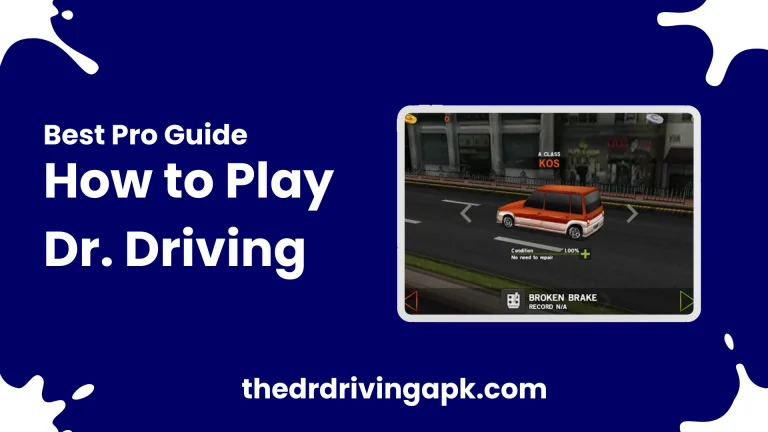
If you’ve spent any real time in Dr Driving, you’ve probably hit a mission called “Broken Brake” and immediately wondered what you’d signed up for. The car won’t stop properly. You tap the brake, and the thing barely slows down. Then you notice a small line in the mission description that says something like “clear 10+,” and it doesn’t explain itself at all.
This mission trips up a lot of players, not because it’s mechanically hard, but because nobody tells you what it’s actually asking you to do. So let’s clear that up first, then get into how to actually pass it without wrecking your car five times in a row.
What Does ‘Clear 10+’ Mean in the Broken Brake Mission
The “clear 10+” label refers to a streak requirement, not a single lucky run. In this mission, your car’s braking power is reduced on purpose. You still have some stopping ability, but it’s weaker and slower to respond than normal. The mission wants you to complete the route — usually a set stretch of road with turns, junctions, or a parking finish — without a major accident, and do it consistently.
“Clear 10+” means you need to complete that run at least ten times in a row without failing, or in some versions of the game, it tracks your best consecutive streak and rewards you once you cross the ten mark. Fail once, even close to the end, and depending on the mode, your streak can reset. That’s usually the part that frustrates people the most — getting to run nine and then clipping a curb.
Why You Keep Failing This Mission
Most players fail broken brake missions for one simple reason: they drive like the brakes are working normally, then panic-brake at the last second. With reduced braking power, panic braking does almost nothing. By the time you realize you’re not stopping in time, it’s too late to correct.
The second common mistake is ignoring speed control before you even reach a turn or stop point. In a normal mission, you can carry speed and brake hard at the end. In Broken Brake, you have to slow down early and gradually, because your car simply won’t shed speed fast once you’re close to an obstacle.
How to Actually Pass the Broken Brake Mission
Treat every stop as if you’re driving on ice. Start easing off the accelerator well before any turn, junction, or pedestrian crossing — earlier than feels natural. You’re compensating for a car that takes longer to respond.
Use engine braking where you can. Letting off the accelerator completely and coasting does more work here than tapping the brake pedal, since the brake itself is unreliable. Combine light braking with early accelerator release instead of relying on one input.
Keep your speed low overall. You don’t need to rush this mission. There’s no bonus for finishing fast — the entire point is control. Cruise at a manageable pace, especially near junctions where AI traffic can appear without much warning.
Watch your lane position on turns. With weaker brakes, cutting a turn too tight often means you can’t correct in time if something’s in the way. Give yourself a wider, cleaner line through corners so you have more room to react.
What Happens If You Fail Mid-Streak
If you crash, hit another car, or run a red light during a broken brake run, most versions count that as a failed attempt and reset your progress toward the 10+ target. This is why rushing is the worst approach. A slow, careful clear that takes a bit longer is worth far more than a fast run that risks a reset on attempt eight or nine.
If you’re repeatedly failing at the same spot on the route, that’s usually a sign you’re carrying too much speed into that section specifically. Slow down earlier than you think you need to, and adjust from there.
Practice Runs Before You Chase the Streak
Before you start actively counting toward the 10+ target, it’s worth running the mission a few times just to get a feel for exactly how much braking power you still have. That number isn’t the same across every version of the game or every difficulty tier, so a quick warm-up run tells you how early you need to start slowing down on this specific route.
Pay attention to how the car behaves at different speeds during these warm-up laps. You’ll usually notice a rough threshold — a speed above which the brakes barely do anything useful, and a speed below which you still have reasonable control. Once you know where that line is, staying under it becomes a lot easier to do on purpose instead of by accident.
A Simple Way to Think About the Whole Mission
It helps to mentally reframe the entire mission before you start. You’re not trying to drive fast and stop hard; you’re trying to drive at a pace where you rarely need to brake hard in the first place. If you find yourself relying on the brake pedal to save a situation, that usually means your entry speed into that section was already too high.
This mindset shift is really the whole trick behind consistently landing a 10+ streak. Players who treat it as a speed challenge tend to fail repeatedly. Players who treat it as a spacing and timing challenge tend to clear it in far fewer attempts, because they’re never putting themselves in a position where the weak brakes actually need to work hard.